


Quantum Computing for Everyone
-
Trang chủ

- Quantum Computing for Everyone

Còn hàng


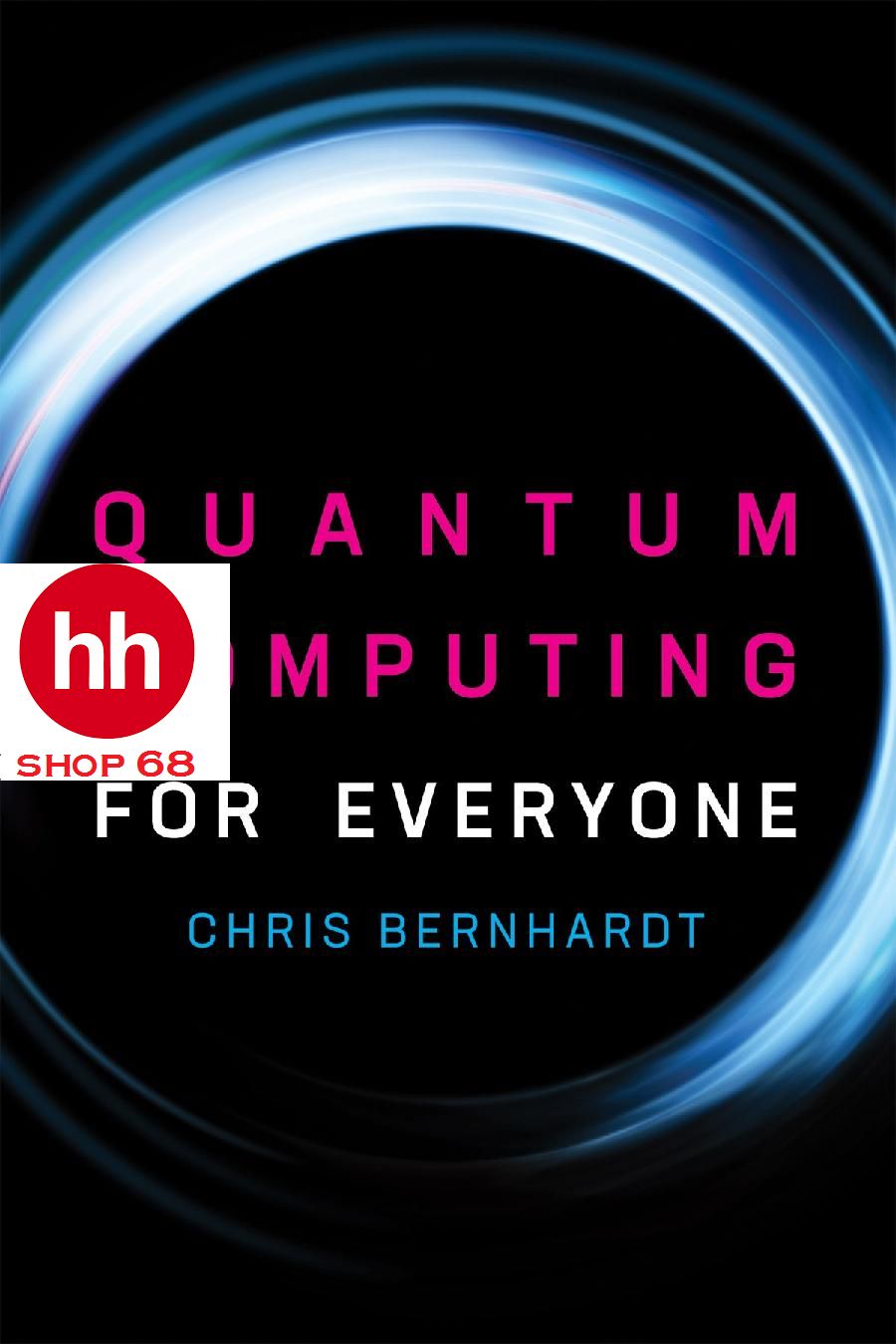
Quantum Computing for Everyone
Tình trạng:
Còn hàng
Tác giả: Đang cập nhật...
Loại: Đang cập nhật...
Nội dung đang cập nhật...
[Xem chi tiết]
120.000₫
140.000₫
-
Mô tả
ĐẢM BẢO " KHÔNG LỖI , KHÔNG ĐEN HÌNH ,KHÔNG ƯNG HOÀN TRẢ TIỀN "
Bản in đen trắng - Bìa mầu, gáy keo nhiệt cực chắc chắn.
Giấy in ngoại nên viết vẽ và hightlight thoải mái.
Chất lượng rõ nét, chữ rõ ràng, giá rất tốt cho mọi người.
Mọi chi tiết xin liên hệ với Shop.
------------------------------------------------------------------------------------
Quantum Computing for Everyone (Mit Press): 216 pages
Author : Chris Bernhardt
Language : English
1) Book Description
Quantum computing is a beautiful fusion of quantum physics and computer science, incorporating some of the most stunning ideas from twentieth-century physics into an entirely new way of thinking about computation. In this book, Chris Bernhardt offers an introduction to quantum computing that is accessible to anyone who is comfortable with high school mathematics. He explains qubits, entanglement, quantum teleportation, quantum algorithms, and other quantum-related topics as clearly as possible for the general reader. Bernhardt, a mathematician himself, simplifies the mathematics as much as he can and provides elementary examples that illustrate both how the math works and what it means.
Bernhardt introduces the basic unit of quantum computing, the qubit, and explains how the qubit can be measured; discusses entanglement—which, he says, is easier to describe mathematically than verbally—and what it means when two qubits are entangled (citing Einstein's characterization of what happens when the measurement of one entangled qubit affects the second as “spooky action at a distance”); and introduces quantum cryptography. He recaps standard topics in classical computing—bits, gates, and logic—and describes Edward Fredkin's ingenious billiard ball computer. He defines quantum gates, considers the speed of quantum algorithms, and describes the building of quantum computers. By the end of the book, readers understand that quantum computing and classical computing are not two distinct disciplines, and that quantum computing is the fundamental form of computing. The basic unit of computation is the qubit, not the bit.
2) About Author
Chris Bernhardt is Professor of Mathematics at Fairfield University and the author of Turing's Vision: The Birth of Computer Science (MIT Press).
Chris Bernhardt is a professor emeritus of mathematics at Fairfield University. He received his PhD in mathematics from the University of Warwick.
His books are on the theory of computation — an area that encompasses mathematics, computer science and physics. This area contains many beautiful and counterintuitive ideas. Prof Bernhardt's aim is to introduce non-specialists to some of the most important of these by keeping everything as simple as possible.

HHSHOP68
Sản phẩm đa dạng : Đầu sách phong phú. Nhận In sách theo yêu cầu.
HHSHOP68
Tư vấn nhiệt tình : Giải đáp mọi yêu cầu của khách hàng nhanh chóng.
HHSHOP68
Uy tín - Chất lượng : Bán hàng bằng cả trái tim.
HHSHOP68
Giá luôn luôn tốt : Giá luôn thấp nhất thị trường.


